top of page
  • Dr Maheen Zaiba
  • Mar 30, 2025
  • 4 min read

Updated: Apr 6, 2025

Written by Dr Maheen Zaiba [PharmD, DOW University Of Health Sciences (DUHS)], Karachi, Pakistan)


an image showing ciproxin 250mg tablet box

Generic:

Ciprofloxacin


Available dosage forms:

Available as tablet form in 100mg, 250mg, 500mg, & 750mg

Injection form as 0.2g injection.


Therapeutic class:

Quinolones Antibiotics


Pharmacological class:

Inhibition of bacterial DNA gyrase and topoisomerase IV.


Mechanism of action:

Ciprofloxacin is a second generation fluoroquinolone that is active against many Gram negative and Gram positive bacteria. It produces its action through inhibition of bacterial DNA gyrase and topoisomerase IV, thereby inhibiting cell division. Bacterial DNA fragmentation will occur as a result of inhibition of the enzymes.


Manufacturer:

OBS Pharmaceuticals.


Storage:

15-30 degree Celsius


Prescription drug?

Yes


Indications and doses:

Acute Sinusitis

Mild/moderate: 500 mg PO q12hr or 400 mg IV q12hr for 10 days

Limitations-of-use: Reserve fluoroquinolones for patients who do not have other available treatment options for acute sinusitis


Bone & Joint Infections

Mild/moderate: 500 mg PO q12hr or 400 mg IV q12hr for ≥4-6 weeks

Severe/complicated: 750 mg PO q12hr or 400 mg IV q8hr for ≥4-6 weeks


Chronic Bacterial Prostatitis

Indicated for chronic bacterial prostatitis caused by Escherichia coli or Proteus mirabilis

Mild/moderate: 500 mg PO q12hr or 400 mg IV q12hr for 28 days


Infectious Diarrhea

Mild/moderate/severe: 500 mg PO q12hr for 5-7 days


Empirical Therapy in Febrile Neutropenic Patients

Severe: 400 mg IV q8hr for 7-14 days


Intra-abdominal Infections

Complicated: 500 mg PO q12hr or 400 mg IV q12hr for 7-14 days


Lower Respiratory Tract Infections

Mild/moderate: 500 mg PO q12hr or 400 mg IV q12hr for 7-14 days

Severe/complicated: 750 mg PO q12hr or 400 mg IV q8hr for 7-14 days

Limitations-of-use: Reserve fluoroquinolones for patients who do not have other available treatment options for acute bacterial exacerbation of chronic bronchitis


Nosocomial Pneumonia

Mild/moderate/severe: 400 mg IV q8hr for 10-14 days


Skin/Skin Structure Infections

Mild/moderate: 500 mg PO q12hr or 400 mg IV q12hr for 7-14 days

Severe/complicated: 750 mg PO q12hr or 400 mg IV q8hr for 7-14 days


Urinary Tract Infections

Acute uncomplicated: Immediate-release, 250 mg PO q12hr for 3 days; extended-release, 500 mg PO q24hr for 3 days

Mild/moderate: 250 mg PO q12hr or 200 mg IV q12hr for 7-14 days

Severe/complicated: 500 mg PO q12hr or 400 mg IV q12hr for 7-14 days

Limitations-of-use: Reserve fluoroquinolones for patients who do not have other available treatment options for uncomplicated urinary tract infections


Urethral & Cervical Gonococcal Infections

Uncomplicated: 250-500 mg PO once


Anthrax Infection

Post exposure therapy

Inhalation (prophylaxis/post exposure): 500 mg PO q12hr or 400 mg IV q12hr for 60 days

Cutaneous: 500 mg PO q12hr or 400 mg IV q12hr for 60 days


Plague

Indication for treatment and prophylaxis of plague due to Yersinia pestis

500-750 mg PO q12hr x14 days, OR

400 mg IV q8-12hr x 14 days


Bronchiectasis (non-FDA approved use)

Noncystic Fibrosis Bronchiectasis (Orphan)

Dry powder for inhalation: Orphan designation for patients with NCFB who suffer from frequent severe acute pulmonary bacterial exacerbations which lead to further inflammation, airway, and lung parenchyma damage.


Dosage Modifications

Renal impairment


·         CrCl >50 mL/min

o    Dose adjustment not necessary


·         CrCl 30-50 mL/min

o    Immediate-release: 250-500 mg PO q12hr

o    Extended-release: 1 g PO q24hr

o    Intravenous: 400 mg IV q8-12hr


·         CrCl 5-29 mL/min

o    Immediate-release: 250-500 mg PO q18hr

o    Extended-release: 500 mg PO q24hr

o    Intravenous: 200-400 mg IV q12-24hr


·         Hemodialysis or peritoneal dialysis

o    Administer after dialysis

o    Immediate-release: 250-500 mg PO q24hr

o    Extended-release: 500 mg PO q24hr

o    Intravenous: 200-400 mg IV q24hr


Side Effects:

  • Allergic reactions—skin rash, itching, hives, swelling of the face, lips, tongue, or throat

  • Heart rhythm changes—fast or irregular heartbeat, dizziness, feeling faint or lightheaded, chest pain, trouble breathing

  • Increased pressure around the brain—severe headache, blurry vision, change in vision, nausea, vomiting

  • Joint, muscle, or tendon pain, swelling, or stiffness

  • Liver injury—right upper belly pain, loss of appetite, nausea, light-colored stool, dark yellow or brown urine, yellowing skin or eyes, unusual weakness or fatigue

  • Mood and behavior changes—anxiety, nervousness, confusion, hallucinations, irritability, hostility, thoughts of suicide or self-harm, worsening mood, feelings of depression

  • Pain, tingling, or numbness in the hands or feet

  • Redness, blistering, peeling, or loosening of the skin, including inside the mouth

  • Seizures

  • Severe diarrhea, fever

  • Sudden or severe chest, back, or stomach pain

  • Unusual vaginal discharge, itching, or odor

Side effects that usually do not require medical attention (report to your care team if they continue or are bothersome):

  • Diarrhea

  • Dry mouth

  • Headache

  • Nausea


Interactions:

Do not take this medication with any of the following:

  • Cisapride

  • Dronedarone

  • Flibanserin

  • Lomitapide

  • Pimozide

  • Thioridazine

  • Tizanidine


This medication may also interact with the following:

  • Antacids

  • Birth control pills

  • Caffeine

  • Certain medications for diabetes, like glipizide, glyburide, or insulin

  • Certain medications that treat or prevent blood clots like warfarin

  • Clozapine

  • Cyclosporine

  • Didanosine buffered tablets or powder

  • Dofetilide

  • Duloxetine

  • Lanthanum carbonate

  • Lidocaine

  • Methotrexate

  • Multivitamins

  • NSAIDS, medications for pain and inflammation, like ibuprofen or naproxen

  • Olanzapine

  • Omeprazole

  • Other medications that prolong the QT interval (cause an abnormal heart rhythm)

  • Phenytoin

  • Probenecid

  • Ropinirole

  • Sevelamer

  • Sildenafil

  • Sucralfate

  • Theophylline

  • Ziprasidone

  • Zolpidem


Other Interactions

·         Caffeine

·         Dairy Food


Pregnancy/lactation:

Not accepted


Precautions:

This medicine may increase your risk for aortic aneurysm (bulge in the wall of the largest artery). Check with your doctor right away if you have sudden chest, stomach, or back pain, trouble breathing, cough, or hoarseness. Some people who take ciprofloxacin may become more sensitive to sunlight than they are normally


Administration guide:

Avoid the administration of ciprofloxacin with dairy products (e.g., milk or yogurt) or calcium-fortified juices alone; however, ciprofloxacin may be taken with meals that contain calcium. Protect yourself from sunlight and avoid excessive exposure to the sun when taking ciprofloxacin. Wear sunblock when outdoors.



  • Writer: Dr. Taha Murtaza
    Dr. Taha Murtaza
  • Mar 30, 2025
  • 2 min read

Updated: Apr 5, 2025

Written by Dr Taha Murtaza [PharmD, DOW University Of Health Sciences (DUHS)], Karachi, Pakistan)


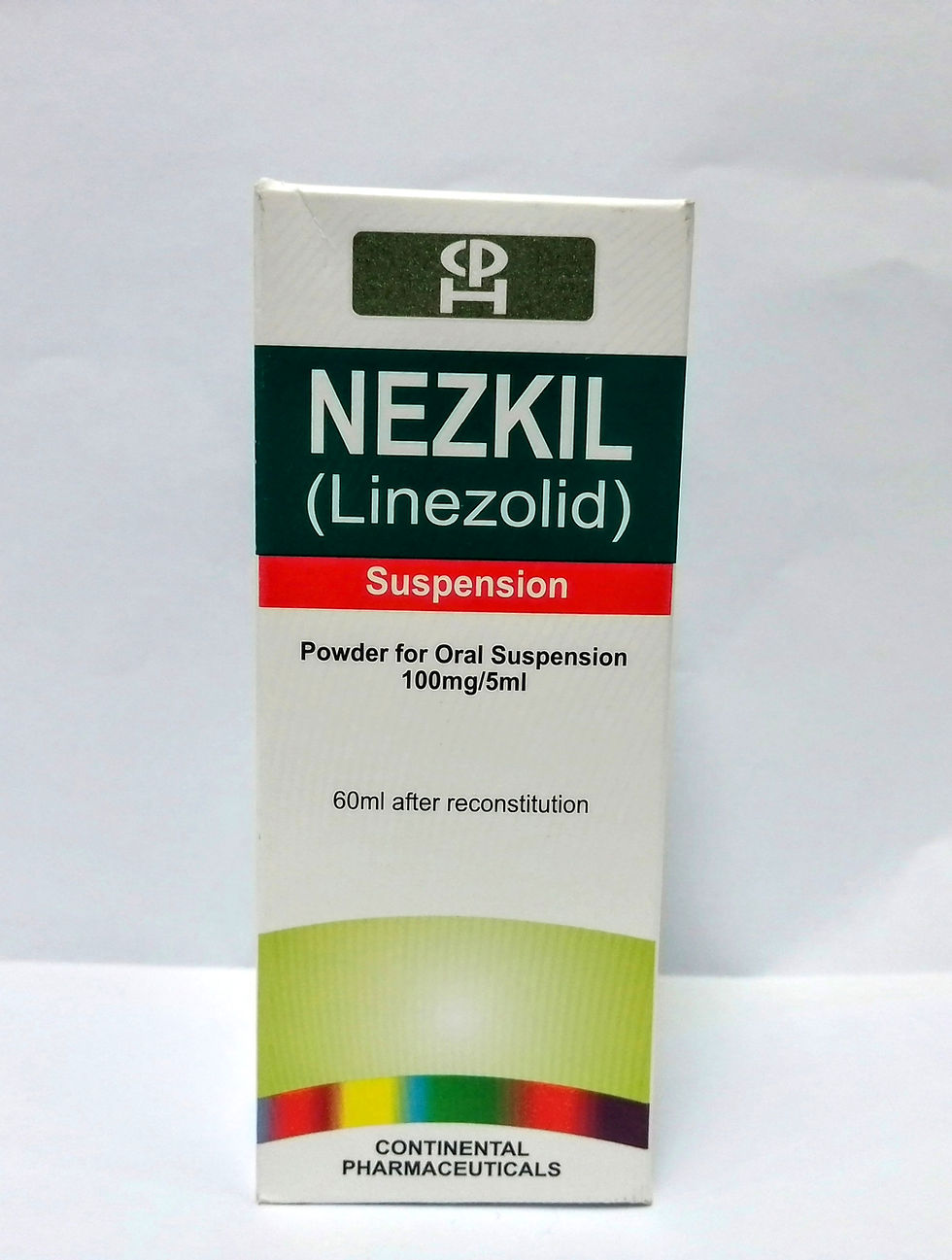
image showing nezkil syrup box.

Generic:

Linezolid


Manufacturer:

Continental Pharmaceuticals


Prescription drug?

Yes


Avaialable dosage forms:

Nezkil 600mg infusion: Each 300ml contains linezolid.....600mg

Nezkil 200mg infusion: Each 100ml contains linezolid.....200mg

Nezkil 600mg tablet: Each tablet contains linezolid.....600mg

Nezkil 400mg tablet: Each tablet contains linezolid.....400mg

Nezkil suspensipn: Each 5ml contains linezolid.....400mg


Pharmacological class:

Protein synthesis inhibitor (50s-protein subunit inhibitor)


Therapeutic class:

Antibiotic


Chemistry:

Synthetic compound belongs to the oxazolidinone class


  1. Indication: Vancomycin-resistant enterococcus faecium infections, including cases with concurrent bacteremia.


    Dose and route of administration:

    Paeds (birth-11years):

    10mg/kg IV/PO q8h.

    Adults:

    600mg IV/PO q12 h

    Recommended duration of treatment (consecutive days):

    14 to 28


  2. Indication: Nosocomial pneumonia caused by staphylococcus aureus (methicillin-susceptible and resistant strains) or streptococcus pneumonia (including multi-drug resistant strains)

    Dose:

    Paeds: (Birth-11years):

    10mg/kg IV/PO q8h.

    Adult (12 years older)

    600mg IV/PO q12h

    Recommended duration of treatment (consecutive days):

    10 to 14 days.


  3. Indication: Complicated skin and skin structure infections caused by Staphylococcus aureus (methicillin-susceptible and resistant strains), streptococcus pyogenes, or Streptococcus agalactia.


    Dose:

    Paeds: (Birth-11years)

    10mg/kg IV/PO q8h.

    Adult (12 years older)

    600mg IV/PO q12h

    Recommended duration of treatment (consecutive days): 10 to 14 days.


  4. Indication: Uncomplicated skin and skin structure infections caused by Staphylococcus aureus (methicillin-susceptible and resistant strains).


    Dose:

    Paeds: (birth-11years age)

    < 5 years: 10mg/kg PO q8h

    5-11 years: 10mg/kg PO q12h

    Adolescents:

    600mg PO q12h

    Adults: 400mg PO q12h

    Recommended duration of treatment (consecutive days):

    10 to 14 days


  5. Community-acquired pneumonia caused by streptococcus pneumonia (including multi-drug resistant strains) including cases with concurrent bacteremia or staphylococcus aureus (methicillin-susceptible strains only)


    Dose:

    Paeds: (Birth-11years)

    10mg/kg IV/PO q8h.

    Adult (12 years older)

    600mg IV/PO q12h

    Recommended duration of treatment (consecutive days):

    10 to 14 days.


Special population:


Geriatrics:

No dose adjustment is required.


Gender:

The same dose is used in males and females.


Renal insufficiency:

No dose adjustment is required.


Hepatic insufficiency:

In patients with child-pugh class A or B i.e. mild-moderate hepatic dysfunction, no dose adjustment is required but patients with severe hepatic dysfunction, pharmacokinetics have not been evaluated.


Pregnancy:

FDA has called linezolid a category C antibiotic for the use in pregnant women means it can only be used by pregnant mothers in case where emergency is required i.e. benefits surpasses side effects.


Lactation:

If alternate antibiotic is available, then kindly refused this in lactating mothers.


Contra-indications:

In patients with hypersensitivity to linezolid or any of the components of the product.


Side-effects:

Common:

  • Diarrhea

  • Headache

  • Nausea


Others:

  • Vomiting

  • insomnia

  • Constipation

  • rash

  • Dizziness

  • fever

  • oral moniliasis

  • vaginal moniliasis

  • hypertension

  • dyspepsia

  • localized abdominal pain

  • pruritis

  • tongue discoloration


Precautions:

  • Patients with pseudomembranous colitis should avoid linezolid

  • The superinfection produced by clostridium difficle should be managed during treatment with linezolid.

  • Thrombocytopenia could occur, and platelets of patients should be monitored.


Interactions:

  • With Mono-amino-oxidase inhibitors

  • With adrenergic agents

  • With serotonergic agents.


  • Writer: Dr. Taha Murtaza
    Dr. Taha Murtaza
  • Mar 30, 2025
  • 2 min read

Updated: Apr 5, 2025

Written by Dr Taha Murtaza [PharmD, DOW University Of Health Sciences (DUHS)], Karachi, Pakistan)


image showing nezkil 600mg injection box

Generic:

Linezolid


Manufacturer:

Continental Pharmaceuticals


Prescription drug?

Yes


Avaialable dosage forms:

Nezkil 600mg infusion: Each 300ml contains linezolid.....600mg

Nezkil 200mg infusion: Each 100ml contains linezolid.....200mg

Nezkil 600mg tablet: Each tablet contains linezolid.....600mg

Nezkil 400mg tablet: Each tablet contains linezolid.....400mg

Nezkil suspensipn: Each 5ml contains linezolid.....400mg


Pharmacological class:

Protein synthesis inhibitor (50s-protein subunit inhibitor)


Therapeutic class:

Antibiotic


Chemistry:

Synthetic compound belongs to the oxazolidinone class


  1. Indication: Vancomycin-resistant enterococcus faecium infections, including cases with concurrent bacteremia.


    Dose and route of administration:

    Paeds (birth-11years):

    10mg/kg IV/PO q8h.

    Adults:

    600mg IV/PO q12 h

    Recommended duration of treatment (consecutive days):

    14 to 28


  2. Indication: Nosocomial pneumonia caused by staphylococcus aureus (methicillin-susceptible and resistant strains) or streptococcus pneumonia (including multi-drug resistant strains)

    Dose:

    Paeds: (Birth-11years):

    10mg/kg IV/PO q8h.

    Adult (12 years older)

    600mg IV/PO q12h

    Recommended duration of treatment (consecutive days):

    10 to 14 days.


  3. Indication: Complicated skin and skin structure infections caused by Staphylococcus aureus (methicillin-susceptible and resistant strains), streptococcus pyogenes, or Streptococcus agalactia.


    Dose:

    Paeds: (Birth-11years)

    10mg/kg IV/PO q8h.

    Adult (12 years older)

    600mg IV/PO q12h

    Recommended duration of treatment (consecutive days): 10 to 14 days.


  4. Indication: Uncomplicated skin and skin structure infections caused by Staphylococcus aureus (methicillin-susceptible and resistant strains).


    Dose:

    Paeds: (birth-11years age)

    < 5 years: 10mg/kg PO q8h

    5-11 years: 10mg/kg PO q12h

    Adolescents:

    600mg PO q12h

    Adults: 400mg PO q12h

    Recommended duration of treatment (consecutive days):

    10 to 14 days


  5. Community-acquired pneumonia caused by streptococcus pneumonia (including multi-drug resistant strains) including cases with concurrent bacteremia or staphylococcus aureus (methicillin-susceptible strains only)


    Dose:

    Paeds: (Birth-11years)

    10mg/kg IV/PO q8h.

    Adult (12 years older)

    600mg IV/PO q12h

    Recommended duration of treatment (consecutive days):

    10 to 14 days.


Special population:


Geriatrics:

No dose adjustment is required.


Gender:

The same dose is used in males and females.


Renal insufficiency:

No dose adjustment is required.


Hepatic insufficiency:

In patients with child-pugh class A or B i.e. mild-moderate hepatic dysfunction, no dose adjustment is required but patients with severe hepatic dysfunction, pharmacokinetics have not been evaluated.


Pregnancy:

FDA has called linezolid a category C antibiotic for the use in pregnant women means it can only be used by pregnant mothers in case where emergency is required i.e. benefits surpasses side effects.


Lactation:

If alternate antibiotic is available, then kindly refused this in lactating mothers.


Contra-indications:

In patients with hypersensitivity to linezolid or any of the components of the product.


Side-effects:

Common:

  • Diarrhea

  • Headache

  • Nausea


Others:

  • Vomiting

  • insomnia

  • Constipation

  • rash

  • Dizziness

  • fever

  • oral moniliasis

  • vaginal moniliasis

  • hypertension

  • dyspepsia

  • localized abdominal pain

  • pruritis

  • tongue discoloration


Precautions:

  • Patients with pseudomembranous colitis should avoid linezolid

  • The superinfection produced by clostridium difficle should be managed during treatment with linezolid.

  • Thrombocytopenia could occur, and platelets of patients should be monitored.


Interactions:

  • With Mono-amino-oxidase inhibitors

  • With adrenergic agents

  • With serotonergic agents.


© All Rights Reserved. Secured and Powered By HAMZA MURTAZA

bottom of page