top of page
  • Writer: Dr. Taha Murtaza
    Dr. Taha Murtaza
  • Oct 4, 2024
  • 2 min read

Updated: Oct 25, 2024


an image of iknoweverything murtaza community pharmacy showing box of advant 8 mg tablet with candesartan cilexetil, getz pharma and 14 tablets written on it.
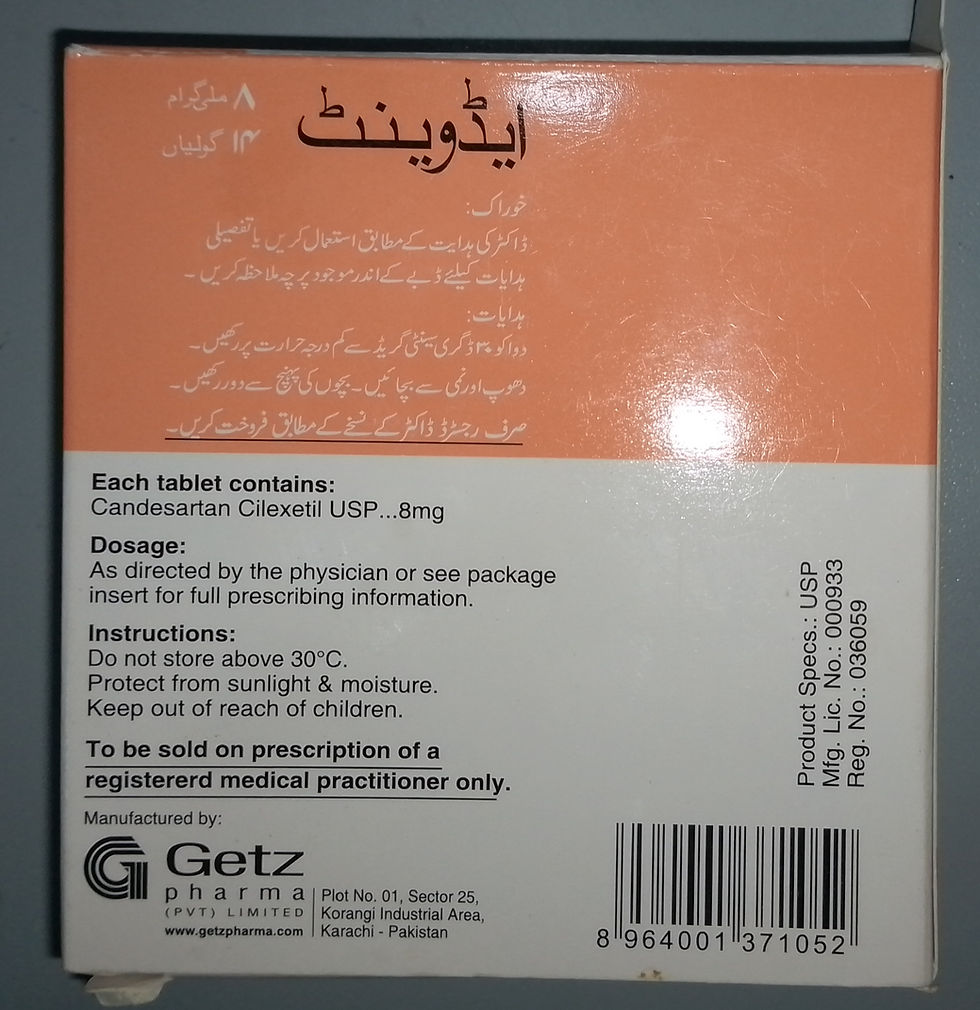
an image of iknoweverything murtaza community pharmacy showing box of advant 8 mg tablet with detail description of the product which is given in our article.

an image of iknoweverything murtaza community pharmacy showing box of advant 16 mg tablet with candesartan cilexetil, getz pharma and 14 tablets written on it
an image of iknoweverything murtaza community pharmacy showing box of advant 16 mg tablet with detail description of the product which is given in our article.

Generic of Advant tablet

Candesartan cilexetil


Manufacturer Advant tablet

Getz Pharma


Price of Advant tablet

Advant 8mg tablet (box of 14): MRP: 400.00 rs

Advant 16mg tablet (box of 14): MRP: 605.00 rs


NOTE: Advant tablet is a prescription drug.


Description:

Candesartan is a selective angiotensin 2 receptor blocker.


Clinical pharmacology:

Mechanism of action:

Candesartan blocks the angiotensin 2 receptor and promotes vasodilation and stops aldosterone secretion.


Therapeutic Indications:

· Advant tablet is used for the treatment of hypertension, either alone or in combination with other medicines (anti-hypertensives).

· It is used for adults and children (Age= 1-<7 years).

· It is used for the treatment of heart failure and impaired left ventricular systolic function (left ventricular ejection fraction < equal to 40%.


Dosage and administration:

1.   Hypertension:

Adults:

The recommended usual dose is one or two tablets per day with dose range from 8-32 mg per day.

Pediatrics:

Children less than 1 year of age must not receive advent tablet.

Children 6 - < 17 years of age:

1) For less than 50kg: dose range is 2-16mg per day

2) For less tha 50kg: 4-32 mg per day.


2.   Heart failure:

The recommended dose is 32 mg once daily. For further assistance ask your pharmacist.


3.   Special population:


Renal insufficiency:

No dose adjustment is needed.

Hepatic insufficiency :

For patient with moderate hepatic insufficiency, starting dose should be 8 mg.


Adverse reactions:

For adult hypertension

·        Headache

·        Backpain

·        Pharyhngitis

·        Dizziness

·        Fever

·        Paraesthesia

·        Vertigo

·        Dyspepsia

·        Gastroenteritis

·        Tachycardia

·        Palpitation

·        Increase level of creatinine Phosphokinase

·        Hyperglycaemia

·        Hypertriglyceridemia

·        Hyperuricaemia

·        Myalgia

·        Epistaxsis

·        Anxiety

·        Depression

·        Rash

·        Increase in sweating

·        Hematuria

·        Angina pectoris

·        Myocardial infarction

·        Angioderma

Pediatrics hypertension

Renal diseases

Heart failure (adults)

·        Small increase in Serum creatinine and serum potassium levels

·        Small decrease in Hb and hematocrit.


Contra-indications

·       Hypersensitivity to the drug or its excipients

·       Pregnant women in 2nd or 3rd trimester cannot take this medicine.

·       Patient having cholestasis or severe hepatic impairment.

·       Children < 1 year of age.

·       Patient having diabetes militus or renal impairment.


Precautions

·        Warning-fetal toxicity

·        Hypotension

·        Renal aetery stenosis

·        Haemodialysis

·        Aortic and mitral valve stenosis

·        Anesthesia and surgery.

·        Impaired renal function

·        Hyperkalemia

·        Hyperaldosternoism

·        Nursing mothers


Drug Interactions

·        Other anti-hypertensive drugs

·        Potassium sparing diuretics, potassium supplements, salt substitutes containing potassium.

·        Drugs that increase potassium levels e.g. Heparin.

·        ARBs

·        NSAIDs

·        ACE inhibitors

·        ACE inhibitors combined with mineralocorticoid receptor antagonist.

·        Aliskiren


Over dosage :

·        Due to over dose, hypotension may occur.

·        Administer isotonic saline solution, or sympathomimetic medicinal products.


Storage:

·        Do not store above 30 degree celsius.

·        Protect from sunlight and moisture.

·        The expiry date refers to the product correctly stored at required conditions.

·        Keep out of reach of children.

·        To be sold on prescription of a registered medical practitioner only.


  • Writer: Adeeba Rauf
    Adeeba Rauf
  • Sep 19, 2024
  • 11 min read

Updated: Oct 13, 2024

Hajj is a journey to Mecca. Each Muslim should attempt to perform Hajj in the course of their life assuming they are capable. It is one of the Five Mainstays of Islam. It is performed during a particular time every year. Muslims from everywhere the world accumulate in Mecca to perform Hajj. These customs incorporate strolling around the Kaaba and supplicating on the Plain of Arafat.

The journey is a deeply spiritual experience. Hajj is meant to cleanse sins. It brings Muslims closer to God. It involves wearing simple clothing to show equality and unity. Hajj also includes important acts like throwing stones at pillars to reject evil and sacrificing an animal to honor the story of Prophet Ibrahim.

iknoweverything article hajj pilgrimage picture showing khane kaba

Types of hajj pilgrimage


Muslims have three different options when it comes to perform Hajj. Each offers a slightly different experience. Types of pilgrimage are:


Tamattu'


This is the most common form of pilgrimage. Also recommended by the Prophet Muhammad himself. Tamattu' involves the pilgrim performing the rites of the minor pilgrimage ritual known as Umrah. And then performing the rites of the Hajj. Pilgrims performing Tamattu' are called Mutamatti. 


Qiran


In this option, the pilgrim performs the rites of both the Umrah and Hajj in one continuous act with no "break" in the middle. Pilgrims performing Qiran are called Qaarin.


Ifraad


This form of pilgrimage involves performing only the rites of the Hajj. Umrah rites are not involved in this. This form of pilgrimage is notable for being the only one. It does not require animal sacrifice. Pilgrims performing Ifraad are called Mufrid.


Preparations for the Hajj


Make Sure You Are Ready to perform Hajj


Hajj is a religious obligation. It shouldn't to be messed with. In old times, it was normal for explorers to bite the dust during their excursion to Mecca. Present day accommodations currently permit a huge number of Muslims to rapidly and securely travel to and from the sacred city. Hajj should be approached with the seriousness and dedication of these early pilgrims. 


Study the rituals of the Hajj


  • Begin to clear your mind of worldly distractions 

  • Be repentant for past sins, which will be forgiven during your pilgrimage.


Sincerity and Devotion: As with all forms of Muslim worship, Hajj must be undertaken with sincerity. It should be taken out of a devotion to Allah. Hajj cannot be performed for the purpose of gaining worldly recognition. Also the purpose of performing Hajj is not the material gains in this life.


Following the Sunnah: Hajj should be performed as per the Prophet Muhammad's words and deeds. Follow the means as depicted in the Sunnah.


Plan your travel to Saudi Arabia


Hajj happens in the heavenly city of Mecca. A few Hajj ceremonies are performed in the nearby districts of Mecca. This city is situated in Saudi Arabia. As with traveling to any foreign country, you should have; 

  • Your passports

  • Travel documents

  • Tickets

  • Other essentials sorted out well in advance.

iknoweverything article hajj pilgrimage picture showing airplane flying in air

Timing: Hajj is performed in the period of Dhul-Hijjah. Dates to perform Hajj are eighth to the twelfth of Dhul-Hijjah. It is the twelfth month of the Islamic schedule. Islamic schedule is a lunar schedule. That is why, dates to perform Hajj change every year. 


Hajj Visas: The Saudi government offers extraordinary "Hajj visas" to Muslims who have not performed Hajj over the most recent five years. Getting one of these visas requires a modern identification, a finished application structure, duplicates of marriage or birth endorsements, and a forward-thinking inoculation record.


Travel in Groups: Pilgrims often travel to perform the Hajj in the form of groups. It is a sign of solidarity. Contact members of your local Muslim community to see if any are performing Hajj this year. If so, you may want to consider coordinating your trips.


Prepare to Be Immersed in Religion


As a traditionalist Islamic monarchy, Saudi Arabia has rules for personal conduct, especially that of women, that may be unfamiliar to foreigners.


Women’s Travel


All women performing the Hajj should plan to travel in the company of a mahram - any related man, such as her father, brother, husband, son, or an approved individual according to Islamic law. Women over 45 can perform the Hajj without a mahram if they are part of a large group and have a notarized letter of consent from their husband.


Modesty


All people attending the Hajj should prepare to be exceedingly modest for the duration of their stay in Saudi Arabia. Clothing must be modest and unadorned - for much of the pilgrimage, special religious garb is required for men. 

Scented products should be avoided. These items might incorporate cologne, aroma, cosmetics and so on. At the point when an explorer enters the sacrosanct Ihram condition of custom immaculateness, many demonstrations are taboo on him. These prohibited demonstrations include smoking, swearing, shaving, cutting one's nails, and sex.


Practical Tips


Health Preparations


Ensure you have these before traveling;

  • All necessary vaccinations

  • Health check-ups  

  • Carry any required medications with you


Financial Preparations


Save enough money not only for the trip but also for the necessary expenses during your stay and for any emergencies.


Learn the Rites


Study the rituals and practices of Hajj thoroughly. Understanding what you need to do at each stage will help you perform the Hajj correctly and with the right intention.


Pack Appropriately


Pack light. But ensure you have all essentials such as;

  • Appropriate clothing

  • Travel documents

  • Prayer mats

  • Other necessary items


By completely getting ready for the Hajj, you guarantee that you can zero in on the profound parts of the journey, satisfying this significant mainstay of Islam with earnestness and dedication.


Steps


Ihram (State of Purity)

iknoweverything article hajj pilgrimage picture showing three persons wearing hajj clothes

Preparation: Pilgrims enter a state of Ihram before arriving in Mecca. This involves performing a ritual cleansing (ghusl), wearing special white garments, and making the intention (Niyyah) to perform Hajj.


Clothing: Men wear two white seamless cloths, and women wear plain, modest clothing to perform Hajj.


Tawaf (Circumambulation)

iknoweverything article hajj pilgrimage picture showing tawaf

Procedure: Tawaf is performed by circling the Kaaba. Circling is repeated seven times. Direction to the circle is counterclockwise.

Starting Point: This begins at the Black Stone. That black stone is called Hajr e Aswad. Stone is placed in the corner of the Kaaba.

Prayer: Pilgrims recite prayers and supplications during Tawaf.


Sa'i (Running)

iknoweverything article hajj pilgrimage picture showing sai (running)

Procedure: Pilgrims walk seven times between the hills. These hills are of Safa and Marwah. These are located within the Masjid al-Haram.

Significance: This ritual reminds us of the Prophet's wife, Hazrat Hajira. She ran through the hills to find water. She did that for her child, Ismael, to extinguish his thirst.


Mina


iknoweverything article hajj pilgrimage picture showing mina

Travel: On the eighth of Dhul-Hijjah, pioneers travel to Mina. It is a little town close to Mecca.

Activities: Pilgrims spend the night in prayer. Here they prepare for the next day.


Arafat

iknoweverything article hajj pilgrimage picture showing arafat

Key Day: On the ninth of Dhul-Hijjah, pilgrims assemble at the plain of Arafat. 

Wuquf: Travelers stand in petition and request from early afternoon until dusk. This is the main piece of Hajj. 

Lesson: A message is conveyed at Mount Arafat.


Muzdalifah


Night Stay: After dusk upon the arrival of Arafat, pioneers travel to Muzdalifah and go through the night under the open sky. 

Rocks: Pilgrims gather 49 or 70 little stones to use for the stoning custom.

iknoweverything article hajj pilgrimage picture showing muzdalifah

Rami al Jamarat and Eid al Adha


Stoning: On the tenth of Dhul-Hijjah, explorers perform Rami al Jamarat by tossing seven rocks at the biggest of the three points of support, representing the dismissal of wickedness. 

Penance: Explorers then, at that point, play out a creature penance to celebrate Abraham's eagerness to forfeit his child. This denotes the festival of Eid al-Adha. 

Halq or Taqsir: Male travelers shave their heads or trim their hair, while female travelers trim a little piece of their hair. 

Tawaf al Ifadah: Pilgrims return to Mecca to play out another Tawaf, called Tawaf al Ifadah, trailed by Sa'i on the off chance that not done beforehand.

iknoweverything article hajj pilgrimage picture showing rami al jamarat

Ancient Historical Past of Hajj


Hajj, the Islamic journey to Mecca, has its starting points well established inside the records and customs of Islam. It traces all the way back to the hour of Prophet Ibrahim (Abraham), his companion Hagar, and their child Ismail. 

In sync with Islamic ideas, God directed Ibrahim to leave his wife, Hagar, and son, Ismail, inside the desolate fruitless locale of Mecca. Searching for water, Hagar ran multiple times among the slopes of Safa and Marwah till the heavenly messenger Jibril (Gabriel) appeared. He set off a spring of water, known as Zamzam, to spout forward from the floor.

Ibrahim later returned to Mecca with the aid of God's command and, with Ismail, constructed the Kaaba, the sacred cubical shape at the middle of the Grand Mosque in Mecca. The Kaaba became a valuable location of worship for Muslims. 

The rituals of Hajj, which include Tawaf (circumambulating the Kaaba) and Sa'i (taking walks between Safa and Marwah), commemorate those historic occasions and acts of faith by Ibrahim, Hagar, and Ismail. Through the years, these practices were revived and institutionalized by way of Prophet Muhammad, organizing Hajj as a fundamental issue of Islamic worship and an obligatory act for all Muslims who are able to perform Hajj.


Spiritual Significance


Pillar of Islam


Hajj is one of the five Mainstays of Islam, making it a fundamental demonstration of love for Muslims. Far an obligation regarding each Muslim has the substantial and financial way to take on it no less than once of their lifetime.


Demonstration of cohesion


Hajj is a powerful demonstration of the team spirit and equality of the Muslim Ummah (network). Regardless of race, nationality, or social popularity, tens of millions of Muslims gather in Mecca, wearing identical easy white clothes (Ihram), symbolizing purity and equality before God.


Spiritual Renewal


The different customs of Hajj, which incorporates Tawaf (surrounding the Kaaba), Sa'i (running among Safa and Marwah), and remaining at Arafat, are intended to encourage a profound feeling of strict reestablishment and closeness to Allah. Pilgrims are seeking forgiveness for their sins, steering for the future, and a reaffirmation of their faith.


Commemoration of Sacrifice


The custom of creature penance during Eid al-Adha remembers Abraham's readiness to forfeit his child Ishmael in compliance to God's order, and God's arrangement of a slam to be forfeited all things being equal. This act represents accommodation to God's will and is an essential piece of Hajj.


Training of staying power and Perseverance


The physical and emotional demanding situations of Hajj train pilgrims’ staying power, perseverance, and the significance of self-discipline. Those qualities are essential for non-public development and religious increase in Islam.


Reminder of the Day of Judgment


The collection of thousands and thousands of pilgrims in simple white attire on the plains of Arafat is a powerful reminder of the Day of Judgment, when all people will stand before God. This second of standing in prayer and supplication is visible as a rehearsal for the very last responsibility inside the hereafter.


Modern factors


Technological advancements


Technology has greatly facilitated the logistics of Hajj, from travel arrangements to crowd management. Online reserving structures, mobile apps, and GPS tracking help pilgrims navigate their adventure and live prepared.


Transportation and lodging


Stepped forward transportation infrastructure, inclusive of excessive-pace trains and extended airports, has made tour to and inside Saudi Arabia more efficient. Lodging alternatives have additionally extended, with extra resorts and housing centers to be had for pilgrims.


Health and safety Measures


Fitness and safety measures were more advantageous to ensure the well-being of pilgrims. Scientific clinics, emergency services, and health consciousness campaigns are carried out to prevent illnesses and accidents.


Communication and Connectivity


The provision of internet connectivity and cell conversation allows pilgrims to live related with their families and communities, percentage their reports, and get right of entry to statistics about Hajj rituals.


Effects of Hajj


Non secular and religious impacts


Religious Renewal


For plenty Muslims, performing Hajj is a as soon as-in-a-lifetime possibility that gives profound spiritual renewal. The rituals of Hajj, which encompass status at Arafat, performing Tawaf, and the symbolic stoning of the devil, are designed to cleanse the soul and enhance the pilgrim's religion and devotion to Allah.


Feel of unity and Brotherhood


Hajj unites Muslims from generally around the worldwide, rising above public, racial, and social limits. This gathering cultivates a profound feeling of solidarity and fraternity among Muslims, underscoring the idea of the Ummah (overall Muslim people group).

Success of religious responsibility


Completing Hajj is one of the 5 Pillars of Islam, making it a great religious fulfillment for Muslims. This achievement brings a feeling of fear and peace, knowing they've adhered to one of the middle duties of their religion.


Social and Cultural impacts


Strengthening of network Ties


The shared enjoyment of Hajj often ends in more potent bonds within local Muslim groups. Pilgrims coming back from Hajj are reputable and regularly share their experiences and newfound insights, enriching their network's spiritual lifestyles.


Cultural exchange


Pilgrims from various backgrounds come collectively throughout Hajj, mainly to a wealthy trade of cultures and traditions. This exposure to exclusive cultures can develop views and foster greater know-how and tolerance among Muslims.


Economic effects


Improve to Saudi financial system


Hajj appreciably contributes to the financial system of Saudi Arabia. Pilgrims spend on accommodation, food, delivery, and spiritual items, supplying a full-size influx of sales to nearby groups and the country-wide economic system.


Monetary possibilities for Pilgrims

Many pilgrims save for years to come up with the money for the journey, mainly to a focal point on monetary planning and area. The pilgrimage additionally affords financial possibilities for carrier carriers inside the pilgrims' domestic international locations, such as travel groups and non-secular publications.


Role of generation in enhancing the pilgrimage


Generation has considerably improved the Hajj pilgrimage experience in recent years. Cell apps offer pilgrims with vital records, such as prayer times, instructions to key web sites, and real-time updates on crowd conditions. Those apps help pilgrims navigate the complicated rituals and locations, making sure they are able to carry out their obligations more efficiently and properly.

Additionally, digital platforms facilitate better agency and conversation. The Saudi Arabian authorities use superior crowd control structures to screen and manipulate the motion of hundreds of thousands of pilgrims, decreasing the threat of injuries and ensuring a smoother glide.

Drones and surveillance cameras enhance security by imparting real-time monitoring of large gatherings. Furthermore, the virtual reality (VR) era offers instructional equipment, allowing destiny pilgrims to familiarize themselves with the Hajj rituals and websites before their adventure. This technological integration has made the Hajj revel in greater on hand, prepared, and relaxed for tens of millions of Muslims globally.


FAQs


What is Hajj? 


Hajj is a yearly Islamic journey to Mecca, Saudi Arabia, executed by involving Muslims as a strict obligation, being one of the five Mainstays of Islam.


Who is required to carry out Hajj? 


Every adult Muslim who is bodily and financially in a position ought to perform Hajj as a minimum as soon as of their lifetime.


Where does Hajj take place? 


Hajj takes place for the length of the Islamic month of Dhul-Hijjah, surprisingly from the eighth to the twelfth of the month. 


What are the fundamental services of Hajj? 


The vital traditions consolidate Tawaf (circling the Kaaba), Sa'i (taking walks among Safa and Marwah), status at Arafat, and the agent stoning of Satan.


What is Ihram? 


Ihram is a country of religious purity and the simple white clothes worn by means of male pilgrims, symbolizing purity and equality earlier than Allah.


Can women perform Hajj by themselves? 


Women can perform Hajj alone if they're over forty five, a part of a group, and have a notarized letter of consent from a male dad or mum.


What is the significance of the Ka'bah? 


The Ka'bah is Islam's most sacred website, placed in Mecca. Muslims around the arena face it at some stage in prayers, and it is the focal point of the Tawaf ritual.


What is the importance of status at Arafat? 


Status at Arafat is taken into consideration at the top of Hajj, symbolizing the Day of Judgment and presenting a possibility for honest repentance and supplication to Allah.


What is the symbolic stoning of the devil? 


Pilgrims toss stones at three support points in Mina, representing the dismissal of malicious and the allurements of Satan.


What takes place after completing Hajj? 


After finishing Hajj, pilgrims perform a very last Tawaf, called the Farewell Tawaf, and many go to the Prophet's Mosque in Medina earlier than returning home.


Conclusion


Hajj is a profound non secular journey and a middle aspect of Islam. It unites Muslims from all over the international, fostering a feel of world brotherhood and equality. The rituals carried out for the duration of Hajj have deep ancient and religious significance, commemorating the moves of the Prophet Muhammad and in advance prophets.

Regardless of modern-day conveniences, Hajj remains a bodily and mentally annoying pilgrimage, requiring sincere devotion and coaching. The enjoyment leaves pilgrims with a renewed experience of religion and a commitment to guide a righteous existence. To perform Hajj is an once-in-a-lifetime achievement that strengthens one's connection to Allah.


Updated: Sep 4, 2024

Introduction


Cancer still stands as one of the gravest challenges to medical science in the present world. Even though promising treatments in surgery, chemotherapy, and radiation are present, these more or less cause serious side effects in the patients and are often ineffective in selectively concentrating the anti-cancer therapeutic agents within the tumor cells. However, with the possible advent of nanotechnology, revolutionary changes towards the treatment of these patients with cancer can be heralded. Nano robots are tiny machines designed at the nanoscale and, in theory, have the capability to provide site-specific therapies directly to cancer cells in a way that was previously unimaginable. The concept, mechanisms, current research, and future prospects of nanobots in the fight against cancer are the subjects of this paper.


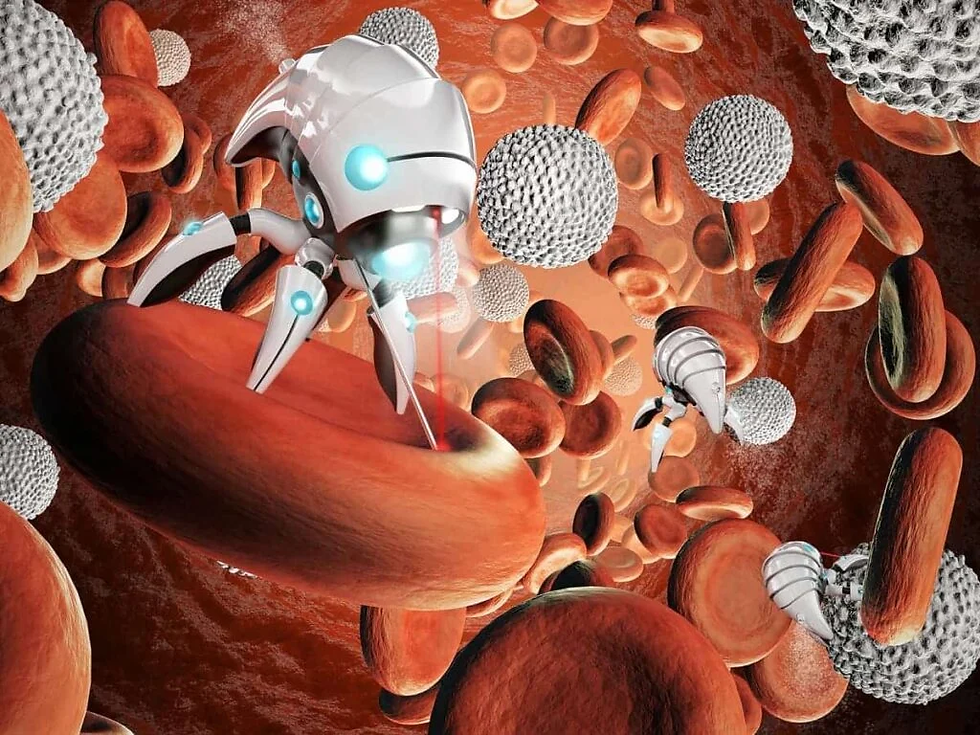
cancer nanobots

Definition and Basics


Nanobots, or more formally termed nanorobots, are highly minute devices purposely designed to perform definite activities at the nanometer level-that is, from 1 to 100 nanometers in size. They can be made from a number of materials, including metals, polymers, and biological molecules, and can also functionally be programmed for performing a number of complicated functions.


The creation of these nanobots relies on advances in nanotechnology, which involves manipulating material at the atomic or molecular scale.


In this ever-evolving technological sphere, a couple of innovations hold a promise for transformation; nanobots seem to be leading them. These tiny robots, designed in dimensions on the scale of 1–100 nanometers, are going to create a revolution in so many fields, starting from medicine and manufacturing to environmental protection and beyond. A concept bound within the domains of science fiction has turned out to be a budding reality with immense potential. In this article we explore the universe of nanobots, comprising design, applications, recent research, and possible future developments.


Understanding Cancer Nanobots


What are Nanobots?


Nanobots or nanorobots are thus extremely tiny machines that work extremely accurately at very fine scales. A nanometer is about 100,000 times smaller than a human hair. This small size allows nanobots to interact with matter at the defining molecular or atomic level, allowing for their highly specialized functions.

The architecture of nanobots consists of several parts, each generally designed to serve specific purposes;


Sensors: Sensors make a nanobot ascertain change of environment or; any change in the sense of a specific stimulant-like chemical signal or physical touch

Actuators: The actuators decide the nanobots' movements and engagements. It may be powered in various ways, such as electromagnetic fields or chemical reaction

Control Systems: The nanobots are managed to perform task office as they are to be executed by these means.

Some of the ways to do this are by ensuring that nanobots can be designed to have several components that each play a specific role. The typical components felt necessary include sensors, motors, and control systems. Through these sensors, the nanobots must detect changes in the environment or some specific biomarkers that cancerous cells have. The motor is for the motion, while the control system informs the direction of the same. The high structural and functional precision at the design level is one of the central factors required in the application of nanobots in targeted therapy for cancer.


cancer nanobots

Nanobots in Cancer Therapy Future


1. Targeted Drug Delivery


The targeted delivery of drugs is perhaps the most promising application of nanobots in cancer treatment. As conventional chemotherapy is systemic and attacks normal tissue, there are undesirable side effects. To reduce the chances of collateral damage to healthy tissues, nanobots can be designed to deliver drugs to the cancerous area specifically.

Nanobots can be designed to bind specifically to biomarkers expressed on the surface of cancerous cells. Upon binding to the surface, they should be able to release therapeutic agents at a controlled rate.


This leads to increased efficacy of the drug with minimal side effects associated with the treatment. For example, nanobots can be loaded with chemotherapy drugs or other therapeutic agents that can release only at the site of cancerous cells.


2. Imaging and Diagnostics


Nanobots also promise enhanced cancer diagnostics. With imaging agents or sensors incorporated into them, the promised nanobots will present real-time information on whether there is a presence of tumorous instances and, if so, where. Such nanobots can circulate in the blood and then accumulate into the sites of the tumors, doing high-quality imaging with, in turn, accurate-mapped tumors.Also, diagnosis abilities can be installed in these nanobots for the study of molecular and genetic properties of the cancer cells, which will greatly help in designing personalized protocols for the treatment. This will highly augment the process of early detection and monitoring in cases of progression and remission in cancer.


cancer nanobots

3. Hyperthermia Therapy


Yet another innovative application is hyperthermia therapy using nanobots with localized heating to kill cancerous cells. Nanobots can be engineered to generate heat when a trigger is given, such as magnetic fields. In the case of targeting the nanobots to the sites of the tumors, controlled heating can be used to burn away the cancer cells without damaging the surrounding healthy tissues.


4. Gene Therapy


Nanobots promise to bring gene therapy into a more precise mode of treatment in fighting cancer. Nanobots can be designed to carry therapeutic genes or RNA molecules directly into cancer cells. In doing so, the genetic mutation can be corrected, or the oncogenes that drive tumor growth can be repressed. Very precise and efficient gene editing may come via the more sophisticated nanobots, paving new ways of intervention to battle genetic and molecular problems in tumors.Expected Swedish Research Landscape on Nanobots in 2021.


cancer nanobots

Overview of Swedish Research on Nanobots


Critical leading research institutions and universities active in the field of nanotechnology and cancer research that involve Karolinska Institutet, Lund University, and Uppsala University are within the boundaries of Sweden. Particularly, researchers at such educational institutions are now essentially looking at the course of development with regard to nanobots and targeted therapies. Although some of the treatments are realized as rather novel and comprise some risks, they are inevitably crucial; however, when the benefits are weighed in, they far outweigh the disadvantages.


• Karolinska Institute: Known for the cutting-edge of medical research, Karolinska Institutet has great cancer research and great realization of nanotechnology. Researchers at the institute are trying and realizing the way in which nanobots could bring the realization of highly precise drug delivery and therefore enhance cancer imaging.


• Lund University: Most important contributions have come from Lund University through its Nanometer Structure Consortium. Researchers here are working on developing nanobots against the treatment of cancer or, perhaps, in diagnostics.Application of Nanomaterials and Nanomedicine


• Uppsala University: Uppsala University is well known for its studies in the field of chemistry as well as biomedical sciences. Here, some of the studies being done in the arena of nanomaterials and nanomedicine include making nanobots that would be very beneficial for treating several types of cancers.


cancer nanobots

Swedish Scientists and Their Contributions


1. Professor Anders Nilsson


He is among the best researchers in nanotechnology and most globally famous in nanomedicine, with some of his contributions including the development of nanobots for cancer treatments. Basically, the area he works in is the production of nontoxic nanoscale devices which are able to target and effectively destroy cancer cells without damaging normal tissues. This statement covers his research work in;


• Nanobot Design: Strategizing nanorobots that have high-end sensors coupled with drug delivery systems. The sensors are designed for detecting specific cancer cell markers for targeted therapy by the nanorobots.


• In Vivo Testing: Preliminary studies in animal models on efficacy and safety of the nanorobots. For example, just to show how effectively nanorobots can be made to carry out the action of undergoing therapeutic indications and drug delivery in vivo.


2. Dr. Maria Eriksson


He is developing, with her innovative work, nanobots in cancer diagnostics. Her research is on how to use nanobots for early detection and proper imaging of malignant tissues. Some key aspects her work includes are:


• Developing imaging technologies with nanobots that incorporate high-resolution imaging agents


• The tumors are going to be perfectly imaged, and this could rectify early detection, as well as proper monitoring, in terms of the progression of cancer cells.


• Biomarker Detection: Engineering nanobots to locate specific biomarkers in relation to cancer. This is very helpful for diagnostic processes since it makes them more accurate, and helps in the development of treatment that is customized.


3. Dr. Erik Johansson


He focuses on efficiency enhancement using nanobots during hyperthermia therapy, a process that employs localized heating in killing cancerous cells. The work is summarized below:


 Thermal Nanobots: Nanobots designed to turn hot on exposure to select stimuli like electromagnetic fields. Such thermal nanobots can be directed to tumor sites and induce local hyperthermia.


• Therapeutic Efficacy: Herein efforts are made to study the efficacy of hyperthermia with nanobots. In the study, it will be determined heating conditions and examined the effects on tumor cells


Current Research and Developments 


Experimental Nanobots


cancer nanobots

Although the cancer nanobots are an experimental unit, a lot has been done toward this course of study. A number of models have been developed, and a large number of prototypes have been tested in animal studies. For example, some have been developed so that they achieve the desired level of targeting of specific types of cancer at the nano level through drug delivery systems.


• Biocompatibility: How to protect the body from any undesirable immune response or toxicity caused by the nanobots.


• Control and Precision: How to achieve independent control with high levels of precision over nano-bot movement and operations inside the complex biological environment of the human body.


• Manufacturing and Scalability: Design cost-effective and scalable methodologies for the nano-robot manufacturing process so that every nano-robot has uniform quality and efficiency.


Clinical Trials and Future Prospects


Several research groups are trying to take these nanobots from the laboratory stage to the next stage—clinical trials. Early results turned out to be promising, but more tests have to be done to properly assess a nanobot's effectiveness and safety. How the ups and downs of applying nanobots are overcome and how its effectiveness be demonstrated in the clinic set up holds the key for its prospects in the treatment of this deadly disease—cancer.

cancer nanobots

Case Studies and Success Stories


1. Delivery Systems with Specifications


One impressive application in nanobot research is the creation of a system for the targeted delivery of chemotherapy drugs. Researchers designed nanobots that can identify themselves and convey medication to the cancer cells, resulting in less bladder, hair and other side effects, with better treatment outcomes. Clinical tests with the use of such systems are being conducted for patients to determine the influence and possible side effects.


2. Assessment


A good promising example, in this regard, is the use of nanobots for imaging and diagnostic processes. Nanobots that tag along imaging agents have the potential to provide very high detail information regarding the position of the tumor and the properties. The progress in the use of such devices has been an approach towards improvement of early detection and the customization of treatment options.


3. Therapy for Hyperthermia


Experimental researches have well proved the hyperthermia therapy applicative scope of nano-bots. The exact targeting of nano-bots has successfully resulted in the killing of cancer cells with the help of localized heating in preclinical models. More studies are yet to be conducted to optimize the method, its applicability, and to establish the success percentage in human patients.


  • Safety and Efficacy


The use of nanobots in medical procedures must be done with reasonable assurance of safety and efficacy. Rigorous test and evaluation work is needed to be done with the aim of ensuring that nanobots do not have unintended consequences or cause harm. Regulatory authorities lay down the benchmarks and conditions within the design and use of nanobots for healthcare applications.


  • Privacy and Data Security


Nanobots for diagnosis and monitoring may gather the sensitive health record, so its privacy and security are vital not to lose patient faith and meeting the regulations under data protection.


  • Accessibility and equity


Similar to any other advanced technology there are greater chances that the benefits of nanobots can fall inequitably. Ensuring the reach to these technologies is easy to equalize the healthcare delivery.

cancer nanobots

Conclusion


Nanobots bring a breakthrough in the treatment of cancer, in creating a new ray of hope toward targeted therapies, better diagnostics, and leading innovative modalities of treatment approach. Several mileages in this direction have been achieved, yet broader research, further development, and challenge meeting are calls toward actual technologies for transfer to the clinic.Use of nanobots, therefore, holds much future in reshuffling the course of conventional ways of approaching one of the most challenging diseases of today. The more research and development are done in these technologies, the more we approach, ideally, toward a future with a better approach to the treatment for cancer, which will be much more effective, less invasive, and formulated corresponding to the needs of an individual patient.


© All Rights Reserved. Secured and Powered By HAMZA MURTAZA

bottom of page