top of page
  • Dr Zahira Batool
  • Apr 25
  • 3 min read

Updated: May 9

پیناڈول


Written by Dr. Zahira Batool [PharmD, Qauid-e-Azam University, Islamabad, Pakistan]


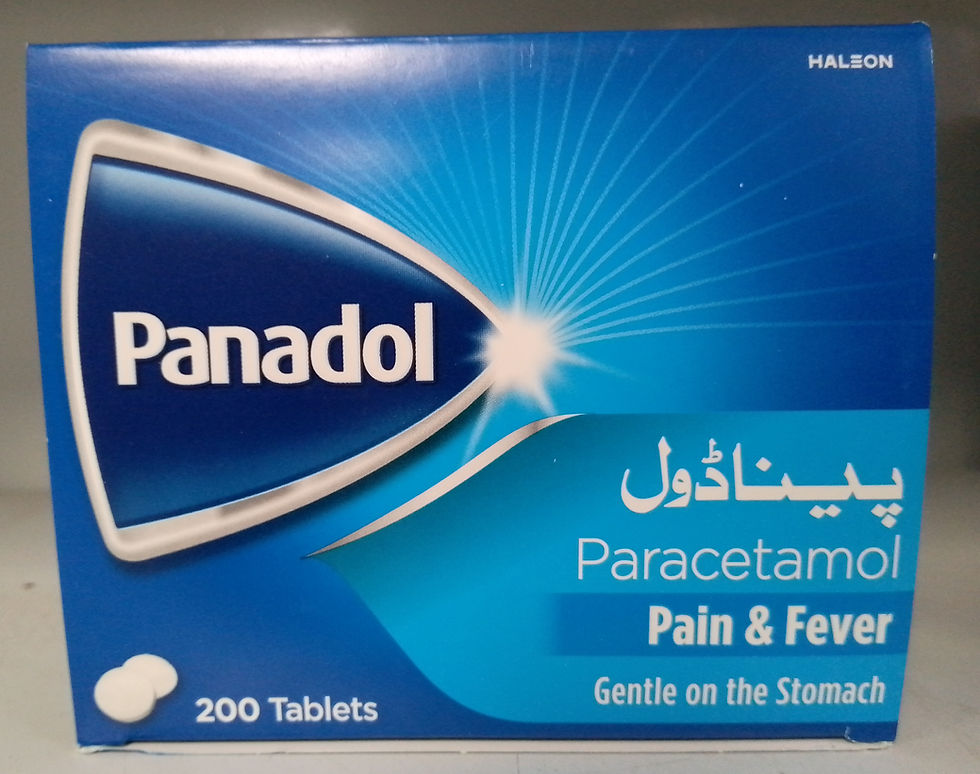
murtazacommunitypharmacy image showing panadol tablet box

Active ingredient:

Each tablet contains Paracetamol 500 mg.


Excipients:

  • Maize starch

  • Potassium sorbate (E 202)

  • Purified talc

  • Stearic acid

  • Povidone

  • Starch pregelatinised,

  • Hypromellose triacetin.


Pack size:

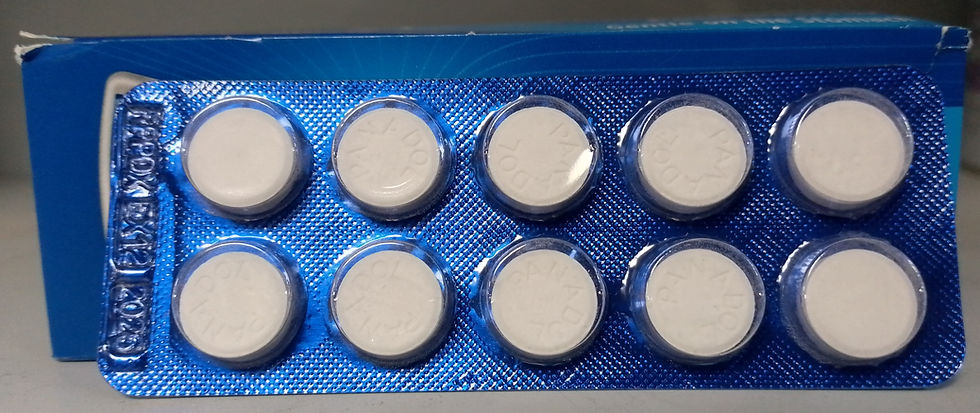
Box of 10 blisters x 12 tablets.


Price:

4 rs per tablet (0.047 dollars)


Manufacturer:

Haleon Pakistan


Therapeutic class:

Analgesic; Antipyretic


Pharmacological class:

Prostaglandin synthesis inhibitor


Indications:

For fast effective temporary relief of pain and discomfort associated

with headache, muscular aches, period pain, arthritis/osteoarthritis,

toothache, migraine headache, cold & flu symptoms, tension

headache, sinus pain/headache, and backache. Reduces fever.


Dosage and recommendation:

Do not exceed the stated dose. The lowest dose necessary to achieve

efficacy should be used for the shortest duration of time. Do not take

this medicine for more than 3 days without medical advice.


Dosage

Maximum day dose 60 mg/kg to be administered in divided doses of

10-15 mg/kg throughout the 24 hours

1. 12 years to adults:

1 to 2 tablets. Maximum daily dose: 8 tablets

2. 7 to 12 years:

½ to 1 tablet, Maximum daily dose: 4 tablets

3. Under 7 years:

Not recommended


Special population:

Renal Impairment:

Patients who have been diagnosed with renal impairment must seek

medical advice before taking this medication


Hepatic Impairment:

This has dose-related toxicity, so avoid large doses.


Method of administration:

Simply place the tablet(s) in your mouth and swallow them down with

water


Contra-indications:

These products are contraindicated in patients with a previous history

of hypersensitivity to paracetamol or any of the excipients.


Adverse effects:

Stop taking this medicine and tell your doctor immediately if:

• You experience allergic reactions such as skin rash or itching,

sometimes with breathing problems or swelling of the lips, tongue,

throat or face.

• You experience a skin rash or peeling, or mouth ulcers.

• You have previously experienced breathing problems with aspirin

or non-steroidal anti-inflammatory drugs and experience a similar

reaction with this product.

• You experience unexplained bruising or bleeding. These reactions

are rare.


Interactions:

Panadol shows interactions with the following drugs:

• Warfarin and other coumarins

• Chloramphenicol

• Hepatotoxic drugs

• Anticonvulsant drugs

• Probenecid

• Cholestyramine


Warnings and precautions:


1. Contains paracetamol. Do not use with any other

paracetamol-containing products. The concomitant use with

other products containing paracetamol may lead to an

overdose.


2. Paracetamol overdose may cause liver failure which can lead

to liver transplant or death.


3. Paracetamol should be used with caution in patients with:

• Impaired liver function: Underlying liver disease increases the

risk of paracetamol-related liver damage

• Impaired kidney function: Administration of paracetamol to

patients with moderate to severe renal impairment may result in

accumulation of paracetamol conjugates.


4. Patients who have been diagnosed with liver or kidney

impairment must seek medical advice before taking this

medication.


5. Cases of hepatic dysfunction/failure have been reported in

patients with depleted glutathione levels, such as those who

are severely malnourished, anorexic, have a low body mass

index or are chronic heavy users of alcohol. In patients with

glutathione-depleted states such as sepsis, the use of

paracetamol may increase the risk of metabolic acidosis.


6. If symptoms persist, medical advice must be sought.


7. Keep out of sight and reach of children.


Overdose:

Important: liver failure and less frequently renal damage can occur

following overdose. Underlying liver disease increases the risk of

paracetamol-related liver damage.


Symptoms and Signs:

Paracetamol overdose may cause liver failure which may require a liver

transplant or lead to death. Acute pancreatitis has been observed,

usually with hepatic dysfunction and liver toxicity. Nausea and

vomiting, the only early features of poisoning, usually settle within 24

hours. Persistence beyond this time, often associated with the onset of

right subcostal pain and tenderness, usually indicates the development of

hepatic necrosis


Treatment:

Immediate medical management is required in the event of an overdose,

even if symptoms of overdose are not present, refer the patient to the

nearest Emergency Medical Centre for management and expert

treatment. If an overdose is confirmed or suspected, seek immediate

advice from your Poison Centre even in patients without symptoms or

signs of overdose due to the risk of delayed liver damage.


Pregnancy:

As with the use of any medicine during pregnancy, pregnant women

should seek medical advice before taking paracetamol. The lowest

effective dose and shortest duration of treatment should be

considered.


Lactation:

Paracetamol is excreted in breast milk but not in a clinically

significant amount at recommended dosages. Available published data

do not contraindicate breastfeeding.


Clinical Pharmacology:

Its mechanism of action is believed to include inhibition of

prostaglandin synthesis, primarily within the central nervous system.


Storage:

Store below 35°C.


murtazacommunitypharmacy image showing panadol tablet box with a strip of 10 tablets


  • Dr. Syed Saad Ali Zaidi
  • Apr 25
  • 3 min read

Updated: Jun 17

mycitracin کریم


Written by Dr Syed Saad Ali [PharmD, DOW University Of Health Sciences (DUHS)], Karachi, Pakistan)


murtazacommunitypharmacy image showing mycitracin ointment box

Mycitracin, a Triple Antibiotic First Aid Ointment, is a combination of multiple antibiotics used to relieve pain. Its petrolatum base soothes the healing of skin and protects it from skin abrasions, minor cuts, scrapes, nicks, and burns.


Brand Name:

MYCITRACIN® –Plus Pain Reliever Triple Antibiotic First Aid Ointment.


Generic Name:

Triple Antibiotics: Bacitracin, Neomycin Sulphate, and Polymyxin-B Sulphate

(Pain reliever) Lidocaine.


Available Dosage forms and their Doses:

Ointment 14.7 gms (Pack Size).


Price:

RS: 157-245 (Mycitracin Plus Ointment prices may fluctuate based on your location and the online store you purchase from).


Therapeutic Class:

First Aid Triple Antibiotic combination

Ointment is available as a Counter (OTC) product.


Pharmacological Class:

Topical Antibacterial Agents (Antibiotics).


Manufacturer:

Pfizer, a Pharmaceutical Industry Company.


murtazacommunitypharmacy image showing mycitracin ointment tube


Storage:

Store at a temperature of between 15˚-25˚C (59˚-77˚F).

Tamper-evident, fully sealed packets.

Check and do not use any open or torn packaged product.


Prescription Drug:

Available without a prescription, a non-prescription drug (OTC).


Clinical pharmacology (mechanism of action):

"This combination of three antibiotics plus a pain reliever that works by targeting and eliminating a range of gram-positive and gram-negative bacteria and prevents pain."


Component          Mechanism of Action with Spectrum

Bacitracin inhibits cell wall synthesis. (gram-positive bacteria)

Neomycin             Disrupts protein synthesis (30S ribosome). (Broad-spectrum)

Polymyxin B          Alters cell membrane permeability. (Gram-negative bacteria)

Lidocaine              Blocks sodium channels to inhibit nerve signals. (Analgesic response)


Indications and Dosages: 


Indicate the treatment and prophylaxis of superficial skin infections.


Dose: Apply a small portion of a thin layer of ointment over the affected area of skin, and if needed, then cover it with gauze dressings


Side effects:

These products don’t have any usual side effects; however, if you ever experience any unusual effects after application of this ointment, then contact your pharmacist or doctor.


Some of the rare side effects reported after use of these products include Uncomplicated skin infections or other bacterial and fungal infections.


If you observe any signs of a severe allergic reaction after application, such as a rash, dizziness, apnea (difficulty breathing), or itching or swelling, particularly in the face, lips, tongue, or neck, then immediately contact your healthcare provider, pharmacist, or doctor.


Interactions:


Drug interaction may interfere with the way how your medication works and increase the risk of side effects. It is important to keep a list of all prescription and OTC products you are using with it and show it to your healthcare provider for the provision of safe and effective therapy.


This heading does not include all interactions, but some of the common interactions include,

·         gentamicin

·         mivacurium

·         neomycin

·         netilmicin

·         pipecuronium

·         plazomicin

·         streptomycin

·         succinylcholine

·         tobramycin


Pregnancy:

No sufficient data is available regarding any negative signs of use of this product during pregnancy. However, this product can only be used when needed as per the advice of a doctor or pharmacist.


lactation:

It is unknown if the medications included in the product may pass into the mother's feed. It's better to consult your pharmacist before breastfeeding.


Precautions

·         Use for the External body only.

·         Avoid contact in contact with your eyes. If yes! Then wash immediately with clean warm water and contact your nearest doctor or pharmacist.

·         People who are allergic to any of the components present in this drug are advised to avoid this product.

·         Recommended to get the treatment within 7 days unless prescribed by your physician.

·         Keep out of the reach of children, in case of accidental ingestion accidentally then call the poison and drug control center right away.


Counselling points:


·         Wash and dry the affected area before applying.

·         Apply a thin layer 1–3 times a day or as directed.

·         Wash hands before and after use.


murtazacommunitypharmacy image showing mycitracin ointment box's backside with important points and directions for use.


  • Dr Maheen Zaiba
  • Apr 20
  • 6 min read

Updated: Apr 25

فلیگائل شربت کا استعمال


Written by Dr Maheen Zaiba [PharmD, DOW University Of Health Sciences (DUHS)], Karachi, Pakistan)


murtazacommunitypharmacy image showing flagyl syrup box


Brand name:

Flagyl


Generic name:

Metronidazole


Available dosage forms and their doses:

Capsule

· 375mg

Tablet

· 250mg

· 500mg

Tablet, extended-release

· 750mg

Oral suspension

· 500mg/5ml

Infusion solution

· 500mg/100ml


Price:

142.78


Therapeutic class:

Metronidazole is a nitroimidazole used to treat trichomoniasis, amebiasis, inflammatory lesions of rosacea, and bacterial infections, as well as prevent postoperative infections. (

Antimicrobial & antiprotazoal)


Pharmacological class:

Nitroimidazole class of antibiotics.


Manufacturer:

Sanofi Aventis


Storage:

  • Oral tablets. Metronidazole oral tablets should be stored at room temperature, between 68 f to 77 f(20 c to 25 c). Store in a cool, dry place. Protect from light.

  • Oral capsules. Metronidazole oral capsules should be stored at room temperature, between 59 f to 77 f (15 c to 25 c). 

  • Oral liquid. Metronidazole oral liquid should be stored at room temperature, between 68 f to 77 f(20 c to 25 c). Store in a cool, dry place. Do not freeze it. Throw away any medicine left in the bottle ten days after opening it.


Prescription drug:

Yes


Mechanism of action:

Metronidazole diffuses into the organism, inhibits protein synthesis by interacting with dna,

And causes a loss of helical dna structure and strand breakage. Therefore, it causes cell death in susceptible organisms. The mechanism of action of metronidazole occurs through a four-step process.


Indications & dosages:

Anaerobic bacterial infections

Loading dose: 15 mg/kg iv; not to exceed 4 g/day  

Maintenance dose: 7.5 mg/kg po/iv (over 1 h) q6hr x 7-10 days (or 2-3 weeks if severe)

Oral suspension

· 7.5 mg/kg po q8hr for 7-10 days; not exceed a 4 g/24 hr


· infections of the bone and joint, lower respiratory tract, and endocardium may require longer treatment


Sexually transmitted disease

  • Prevention following sexual assault

  • 2 g po as a single dose; 3-drug regimen that also includes ceftriaxone or cefixime, plus

Azithromycin or doxycycline (cdc std guidelines, 2010)


Bacterial vaginosis

Nonpregnant women

· 500 mg po bid x 7 days, or

· 2 g po qday single dose, or

· extended-release: 750 mg po qday x 7 days

Pregnant women

· 500 mg po bid x 7 days, or

· 250 mg po tid x 7 days


Colorectal surgical infection

Prophylaxis; start after mechanical bowel preparation the afternoon and evening before surgery 1 g po q6-8hr for 3 doses 15 mg/kg iv over 30-60 min; complete approximately 1 hr before surgery; may administer 7.5 Mg/kg iv over 30-60 min at 6 and 12 hr after initial dose for maintenance; discontinue within 12 Hr after surgery


Trichomoniasis

250 mg po q8hr for 7 days 2 g po qday single dose; alternatively, 1g po q12hr for 2 doses

Individualize dosage regimen

· single-dose treatment may help improve compliance, especially if administered under

Supervision, in those patients who may be nonadherent to a seven-day regimen

· seven-day treatment may minimize reinfection by protecting patient long enough for

Sexual contacts to obtain appropriate treatment; some data suggest cure rates may be higher

After a seven-day course of treatment than after a one-day treatment regimen;

· if a repeat course of therapy is required, a 4- to 6-weeks need to elapse between courses

And reconfirmed presence of the trichomonad; monitor total and differential leukocyte

Counts before and after re-treatment


Amebiasis

Acute intestinal amebiasis (acute amebic dysentery): 750 mg po tid 5-10 days


Amebic liver abscess:

500-750 mg po tid for 5-10 days


Giardiasis (non-fda use)

500 mg po q12hr for 5-7 days


Gardnerella infection

 Immediate release: 500 mg po q12hr

Extended-release: 750 mg po qday for 7 days; take on empty stomach


Helicobacter pylori infection (off-label)

250-500 mg po qid in combination with tetracycline (500 mg) and bismuth subsalicylate (525

Mg) x 14 days


Nongonococcal urethritis (off-label)

2 g po qday single dose with erythromycin (500 mg qid) or erythromycin ethylsuccinate (800

Mg qid) x 7 days


Pelvic inflammatory disease (off-label)

500 mg po q12hr for 14 days in conjunction with ofloxacin or levofloxacin


Dosage modifications

Renal impairment

· mild-to-moderate: Dose adjustment not considered necessary as elimination half-life not

Significantly altered

· severe or end-stage renal disease: Metronidazole and metronidazole metabolites may

Accumulate significantly because of reduced urinary excretion; monitor patients not

Undergoing hemodialysis

· hemodialysis removes significant amounts of metronidazole and its metabolites from

Systemic circulation; supplementation may be necessary

· peritoneal dialysis: Monitor for signs of toxicity due to potential accumulation of

Metronidazole metabolites


Hepatic impairment

· mild-to- moderate (child-pugh a or b): No dosage adjustment necessary; monitor

· severe (child-pugh c): Reduce dose of by 50%


Dosing considerations

Hepatic failure

· mild to moderate hapatic impairment (child-pugh a or b): No dosage adjustment needed

But patients should be monitored for metronidazole associated adverse events

· severe hepatic impairment: Reduce dose of by 50%


Renal failure

· mild to moderate renal impairment: Dose adjustment not considered necessary as

Elimination half-life not significantly altered

· severe renal impairment or end stage of renal disease: Metronidazole and metronidazole

Metabolites may accumulate significantly because of reduced urinary excretion; monitor in

Severe renal impairment or end stage of renal disease, not undergoing hemodialysis

· hemodialysis removes significant amounts of metronidazole and its metabolites from

Systemic circulation; supplementation may be necessary

· peritoneal dialysis: Monitor for signs of toxicity due to potential accumulation of

Metronidazole metabolites


Crohn disease (orphan)


Topical treatment of active perianal crohn disease


Side effects:

· allergic reactions—skin rash, itching, hives, swelling of the face, lips, tongue, or

Throat

· dizziness, loss of balance or coordination, confusion or trouble speaking

· fever, neck pain or stiffness, sensitivity to light, headache, nausea, vomiting,

Confusion

· heart rhythm changes—fast or irregular heartbeat, dizziness, feeling faint or

Lightheaded, chest pain, trouble breathing

· liver injury—right upper belly pain, loss of appetite, nausea, light-colored stool,

Dark yellow or brown urine, yellowing skin or eyes, unusual weakness or fatigue

· pain, tingling, or numbness in the hands or feet

· redness, blistering, peeling, or loosening of the skin, including inside the mouth

· seizures

· severe diarrhea, fever

· sudden eye pain or change in vision such as blurry vision, seeing halos around

Lights, vision loss

· unusual vaginal discharge, itching, or odor


Common side effects:

· diarrhea

· metallic taste in mouth

· nausea

· stomach pain


Interactions:


· disulfiram: Avoid taking this medication if you have been on therapy with disulfiram

Within the last 14 days. Concomitant administration can lead to serious side effects that

Require medical attention.

· alfuzosin.

· amiodarone.

· amisulpride.

· bupropion.

· chlorpromazine.

· ciprofloxacin.

· clarithromycin.

 · clomipramine.

· desipramine.

· donepezil.

· erythromycin.

· felbamate.

· fluconazole.

· fluorouracil.

· fluoxetin.

· fosphenytoin.

· gemifloxacin.

· haloperidol.

· levofloxacin.

· moxifloxacin.

· olanzapine.

· probucol.

· quetiapine.

· quinidine.

· sotalol.

· warfarin.


These are some of the significant interacting drugs with metronidazole. Contact the physician or Pharmacist to check for interactions before taking the drug with other drugs.


With alcohol: The combination of metronidazole with alcohol may cause nausea, vomiting,

Rapid heartbeat, and facial flushing. While using metronidazole and for at least three days

Following the last dose, avoid alcohol completely.


With diseases:

· liver diseases: Dose adjustment may be required.

· kidney diseases: Delayed elimination of drug reported. It may require dose adjustment.

· low blood counts: Taking this medication may worsen these signs

· cockayne syndrome: A rare genetic disorder.


Pregnancy & lactation:

Flagyl (metronidazole) is generally not recommended during the first trimester of pregnancy due To potential risks, but it can be used later in pregnancy if the benefits outweigh the risks. It's also not recommended during breastfeeding because it can pass into breast milk and may affect the baby.


Fda pregnancy category b - no proven risk in humans.


Precautions:

· dermatologic: Topical cream use may cause skin irritation.

· metabolic: Caution is advised if on current therapy with corticosteroid drugs, those on a

Controlled sodium diet, or those predisposed to edema (swelling of face, limbs, etc.).

· liver problems: Dose needs to be adjusted.

· kidney diseases: Kidney diseases can slow down the excretion of the medication. So,

Dose adjustments may be required.

· low blood cell counts: Metronidazole may cause low blood counts. Hence, inform the

Doctor if the blood counts are low.

· pregnancy: Pregnant women with trichomoniasis vaginalis, regardless of

The pregnancy stage, should be tested and assessed by their physician before starting the

Medication.

Do not use mteronidazole in the following conditions:

A known allergy to the medication or any of its components.

Concomitant administration with alcohol or products containing propylene glycol.

Administration of drug disulfiram with or within two weeks.

Cockayne syndrome (a genetic condition characterized by small head size, stature, and slow

Development).

First trimester (1 to12 week) of pregnancy.


Warnings

Black box warnings

Potenial for carcinogenicity

· metronidazole has been shown to be carcinogenic in mice and rats

· avoid unnecessary use

· reserve for use in trichomoniasis and anaerobic bacterial infection.


Counselling points:

· tablets: Swallow the medication as a whole after food.

· liquid: Measure the right dose using a syringe or measure and take each dose, preferably

After food.

· suppository: Follow the instructions given on the package.

· gel and cream: Apply on the affected area and rub gently, as directed by the doctor.


Missed dose:

Take this medication as soon as you remember if a dose is missed. If the next dose is near, skip the missed one and take the regular dosing regimen. Do not take two or double doses together.


Overdose:

In case of overdosing on the medication, contact the emergency department or the nearest poison control center immediately.


© All Rights Reserved. Secured and Powered By HAMZA MURTAZA

bottom of page